
Industry Pro: Music Editor Jim Schultz
 For many years working on a studio lot, every time I saw musicians making their way from the parking lot with their instruments slung over their shoulders, I wished I could follow them to the scoring stage. It was a dream of mine to see a live orchestral scoring. Today’s profile subject was kind enough to invite me to visit the booth during a recent scoring session. I watched the director, the composer, and other key members of the music department, including Jim, finesse a fifteen-second section of the score which played over a pivotal dramatic moment in the film. Yes, it lived up to my dream. And it gave me a glimpse into the role of the music editor on a feature film. Read on for more about this seasoned pro whose credits include 3:10 TO YUMA, OCEANS 11, and INGLORIOUS BASTERDS.
Current position and/or recently completed project or projects: Freelance music editor. I recently completed WOLVERINE and before that, A GOOD DAY TO DIE HARD (aka DIE HARD 5), both for 20th Century Fox.
Hometown: Santa Monica, California.
College and degrees: I studied philosophy at Pitzer College for two years and then spent two years studying Recording Arts at UCLA Extension.
What was the origin of your pursuit of a career in the music business, and more specifically, working with music in film? I’ve been playing guitar since I was in my early teens. First and foremost, I am a music lover; you know, a record collector and music geek. I knew I wanted to work in music, but I also knew that I wasn’t a good enough player to be a professional musician. As I worked with various bands or played in various bands, as time went on, I gravitated towards engineering. I was really good with effects and mixing our live sound for shows so I set out to pursue engineering. As I was working as an engineer, a door opened to film. And it turned out the film work employed some of my greater talents beyond just engineering.
Okay, so getting back to your school years, did you have an internship? Not through the school, but yes. I had an internship at the Studio at the Sunset Marquis.
How long was it for and what did you do? I interned there for probably about nine months. At first, I did typical recording studio intern duties: cleaning up the studio, going on food runs, setting up microphones… that type of thing. I started taking on more and more responsibilities and the more I did, the more they needed me. Eventually they realized they would have to pay me so it turned into a job.
That’s great. As my knowledge of the studio and the operations of the studio grew, I got hired as operations manager and then got a position as a staff engineer in the studio.
Talk a little about who the clients were and what kind of projects they did. The Studio at the Sunset Marquis is now known as NightBird Recording Studios. It’s in the basement of the Sunset Marquis Hotel and Villas in West Hollywood. The hotel is a real low key, rock star-type hotel. A lot of headlining type bands coming through town would stay there. The Rolling Stones, Metallica, Green Day, Aerosmith, could all be hanging out there on any given night.
The studio was owned by a guy named Jed Leiber, a musician and composer himself. He used to stay at the hotel a lot and over the years became very good friends with the hotel management. He and saw an empty room and asked if he could put some of his keyboards there when he came to town. They said sure. Over the years, a ‘room to put his keyboards in’ turned into a full commercial recording facility that took advantage of its location and the people staying in the hotel. It created a really interesting relationship between its location and its clientele.
And rock albums were recorded there? Yes. There was some tracking done there, mostly overdubs then. It’s a good mix room, so there was a lot of mixing. It didn’t have a large live room at the time I worked there. They’ve since expanded. But they had a small tracking room so it was a good facility for overdubs and mixing. At the time that I was there, they had a mixing console that film mixers really liked working on. That’s how I met some scoring mixers and film composers.
Which was the key to your entrance into film music, correct? Yes, it was an interesting merging of technology and location and timing, really. And, as I said, there was this console that some film mixers liked to use. This was right around the time where Pro Tools was becoming more the go-to multi-track recording machine. Tape machines were being phased out of the studio, but Pro Tools at the time wasn’t powerful enough to run a digital picture alongside the standalone multitrack system. As a result, the workload was split across multiple DAW systems. The way we set up the room, and the way I worked as the assistant on a lot of those projects, was to record multitracks into a standalone machine, output that to mix console and print those mixes to another Pro Tool system which would have the digital picture running along there.
So where the traditional role of an assistant engineer at the time would be aligning tape heads and recording your mixes to the tape machine, since that tape machine had become a Pro Tool system with digital picture in it on some of these film projects, I ended up recording these mixes into the time line of the picture. So I was now responsible for where these mixes played in linear sense to the picture.
You were kind of bridging the limitations of the technology? Yes. I ended up with part of the responsibility that a traditional music editor would have by virtue of the technology at the time, in this particular studio with this particular console and how we decided to engineer the room together.
How did that turn into the next step and then take you forward in your career? Well, my first few films were with a nontraditional composer, by which I mean non-orchestral. He was a composer who worked more in a band/rock and roll arrangement. It was a good fit for me. I was not a traditional music editor – not a music editor at all at the time – but I did this particular job. And in his team and in his work flow, it was a necessary position and we got things done. So I did about three films with him following that. And with each film, I learned more and more about music editorial. It was then that I realized I really enjoyed being a music editor. It was the merging of my technical pursuits in engineering and my creative pursuits as a musician.
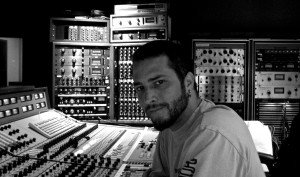 Can you stop here and explain what the role of the music editor is in filmmaking and how you fit in, working with the composer and the other members of the sound team? There are a few different roles and responsibilities we can fill as music editors. I sometimes divide it up into three basic sections. We could be hired on at any point and do any one of these jobs discreetly, we can do all three, or we can do a combination thereof.
Part one would be the temp score. In the initial assembly of a film, when the picture editor and director are working on a director’s cut, a music editor may be hired to do a temp score, a temporary soundtrack. As the picture is cut and assembled, we are assembling music and, in that process, we’re starting to define the tone, timbre, instrumentation, style, and feel of the music throughout the film. Included in this would be the initial of the spotting of the film: where we’re going to have the music start and stop and what qualities of all of the aforementioned details it would have.
We do that for a variety of reasons. Obviously, you’re showing a film and you want it to play somewhat like the film the director imagines it’s eventually going to be when it’s complete. That might be for an audience or just internal screenings. It also serves to show the filmmakers what works, what doesn’t, and begin the dialogue between the director and the composer about the score. You could have a temporary piece of music in a scene and it gives the director a jumping off point to begin discussions with the composer to say, “Hey, what I really like about this cue is such and such. What I don’t like about this cue is such and such.” A lot of times we’ll be hired just to do a temp score.
When the composer starts work, we move into more what I would describe as part two, the composer support & scoring role. In that process, we’re helping facilitate the composer’s work on a technical basis. As picture is constantly changing, we keep the composer working to current picture, keeping track of what needs to change from one version of picture to another, and we continue to bridge the gap between the director and the composer. We are like the middle man between the director and the composer because we can speak to the director on the director’s terms and we can speak to the composer on the composer’s terms. It’s our job to get the director’s needs met and be able to express those needs to the composer and vice versa.
And then we move into the third part, recording the original score. We are responsible for all of the technical requirements necessary to make that happen, and then we take them through the mix. We handle the music all through the process so we know the pedigree of the music. We know the evolution of the music. We know where it came from (ie., the picture version, the creative intent), what things might change – what needs to change as picture changes, what things might change for other reasons, and what things the director has expressed interest or disinterest in featuring when we mix the score. We design the delivery of the score so we can best prepare for all these variables. The last phase is the final dub, where the music is mixed with sound effects and dialogue to create the final soundtrack for the film. We are basically the ambassadors of all things music throughout the process. Additionally, throughout the process we’re dealing with all the source music – already prerecorded music, songs that might be licensed going into the film, and we’re cutting options in to address all of the source music needs of the film.
So you work with the director, the composer, the music supervisor, the editor and the other personnel in the sound department. Yes. We work with everyone. And we can be hired through any one of those people as well.
Oh, that’s interesting. I would have thought that you would be hired by either the composer or the director. Generally, yes. However, it might be an established relationship with a picture editor who brings me in. It might be a sound team, if we’re hired on early in the process before they have a composer, which is very possible if we’re brought in to do a temp score. In this case, it might be a director saying to his picture editor or sound supervisor, “We’ve got to get someone started on this temp score. Who do you know that would be the right fit?”
Okay, so let me jump into some questions. What do you consider your big break, if any? I think being brought into Modern Music was a huge break for me. This was a couple of years after the Sunset Marquis. I had worked freelance, but I was looking for something to grow into and to expand my network. Leigh Kotkin was the manager at Modern at the time. He met with me, looked at my resume, got to know me, and really believed in me. I then spent the next five years working at Modern. I don’t think I would have been able to work on films of that caliber without working with Modern. They brought me to the next level.
So what is the best career advice you ever got? My first boss at the Sunset Marquis was the chief engineer, a guy named Tom Fritzi. He had a really natural way of teaching by example. What I learned from him is to do everything with the utmost attention to detail, professionalism, and enthusiasm. The approach and the process is always the same from getting coffee for the band to mixing an orchestra. You have to put the same mindset to work, no matter what you are doing.
That’s great advice. Now I’m looking for a Eureka moment (when you realized you did or did not want to do something or that you should do something differently, etc.): I was going to UCLA for Recording Arts and also interning at the studio at the same time. I was spending more and more time at the studio and I realized one day after I left the studio in the middle of a session to go to school that it didn’t make any sense to be doing that. I was leaving a recording studio during a session with people that I never dreamed I would meet let alone work with, to go to school. So I stopped going to school.
Describe a typical workday in your current position when you’re working on a movie. It varies. I could be working on a temp score and just cutting in my studio. I could be in a meeting with composers, directors, producers. We could be spotting the film and discussing music and where it should be with all the filmmakers. We could be on a scoring stage, recording an orchestra, or recording individual musicians. I could be on a mixing stage working on the mix of the score or on a dubbing stage working on the final dub of the film. Or I could be in my cutting room making changes to the already recorded music.
So not a lot of typical workdays? Not a lot of typical workdays. Lots of different days. I could also be coordinating logistics and just organizing what needs to be done and looking after our timing and our scheduling. It all really depends on where we are in the process and what the needs are of the film on any given day.
So worst job or worst day in the entertainment industry? There are days where the time and energy spent explaining what needs to be done exceeds the time and energy that would be spent actually getting it done. That to me is a worse day than others.
What about best job or best day in the entertainment industry? I think my favorite day is the day we play back a mix on the final dub, when we’re all pretty happy with what we have done. You see months and months of work come together and it’s all part of a greater whole. A collaborative whole that took the talents of so many people.
What’s the best thing about your current job? I try to learn something new every day and I love that. And I love the process of collaborating with so many different talented people on a daily basis.
Worst thing about your current job? The long hours can wear me down. There are stretches of weeks or months when I see more of the crew than my wife and kids and that’s difficult. However, it’s got a flip side because when a film is done, I usually take some time off and spend uninterrupted time with family.
Okay. I’m looking for a brush with greatness. It can be a celebrity encounter or just being exposed to someone being brilliant at what they do. I will go with someone being brilliant at what they do. I was working on a film called SYNECDOCHE, NEW YORK with a composer, Jon Brion. We were in the recording studio working with a string section and he had a plan for improvising with the string section while we were there. Improvising is not something that people ordinarily do with orchestras or string ensembles. In fact, it’s pretty out of the ordinary.
But Jon is one of the most brilliant people I have had the pleasure to work with. Once he got going, he had the musicians play any note within the key that the piece was written, over any tempo, any articulation. The only restrictions the players had was it had to be within the note of the modal scale that the piece of music was written and he then wanted to record the music at half speed. So when we played it back, it would play back at double speed when we played back at normal speed. And when we got this down, we went and played it back and it was one of the most amazing things I ever heard going to tape and going into a film score.
It was an unbelievably beautiful piece of music that really transcended anything that could have been written on the page. I stood back and got a lump in my throat and remembered this is why I do what I do. This is why I love music because there’s always ‑‑ something amazing can always come out of it.
What’s the one thing you wished you’d known when you started? I wish I understood our union contract, and how great it is that we have one. I think a strong knowledge of the union contract is a pretty good thing to have. In a music studio, when I was an engineer, you just work and work and work until everybody is exhausted and wants to go home. You aren’t done until the client decides that they are done for the day. There’s no protection or anything against insanely long hours, no breaks, or not eating.
I remember one of my first films on a dubbing stage as a music editor. I was working in my headphones and I was really deep into what I was doing. When I looked up, everybody had left the stage and the lights were off and I had no idea why. I mean, it was literally an “aha.” I was like, “Oh… There are rules here.”
Oh, that’s funny. You were the new kid. Yeah. I thought we were going to be there until someone in charge called it quits.
So what do you think is the secret to your success? And what advice would you give somebody either coming up behind you, either as a music editor or in general in the business? I’m not sure what the secret of my success is. I just keep it simple and put everything I have into everything I do and really just try to stay in the moment. My advice to the newbie is probably that what or how much you know is not as important as how you do what needs to be done.
Kind of like the advice you got? Yeah, I would say so.
So what’s your next move? Where do you go now? I don’t think I go anywhere different. I’m in a pretty good place right now. I can’t say that I’d like to be doing anything different. I am very lucky to work with some people that I fit in well with. We do good work and have fun doing it. I keep busy. I’m just grateful and content to continue working as the opportunities arise.
For more information about Jim’s work and/or his studio, visit his website, Wavesync Music .
If you liked this post, subscribe to Your Industry Insider to get weekly emails about new content, free webinars, and special offers. Become a Your Industry Insider INSIDER today!
ENTER YOUR EMAIL ADDRESS HERE & PRESS SUBMIT


Comments

About JennyYM
Jenny Yerrick Martin is a veteran entertainment hiring executive with 20+ years in film, television, and music. She created yourindustryinsider.com to give students, recent grads and others a true picture of the layout of the industry, and how to break in, transition to a new area, or achieve more success on their current path.


